


This article won 3rd place in our recent Readers' Choice Contest! Congratulations to the author and thanks to everyone who took the time to read the stories and vote.

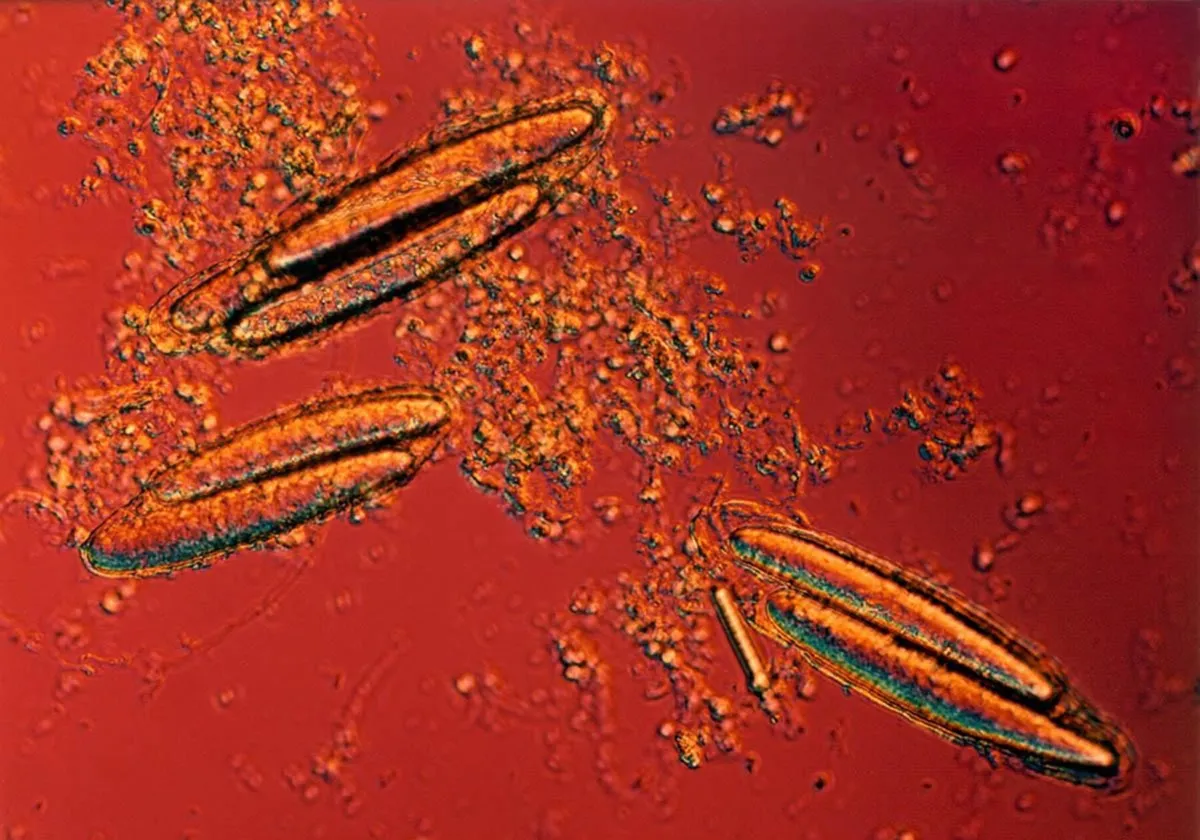
The term microbiology often implies the study of microscopic organisms that require a microscope to see, but humans can view some microbes with the naked eye. Generations of scientists puzzled over these giant bacteria, wondering how they reproduce, generate energy, and maintain such a large size.1 With biological features seen in both bacteria and higher organisms, giant bacteria are like a mid-way steppingstone on the evolutionary road to complex life.
Genomic studies of giant bacteria have proven difficult given the mystery surrounding how to properly grow these organisms in the laboratory. Without many manageable cells, scientists struggle to obtain sufficient genomic material for these studies. In a study published in the Proceedings of the National Academy of Sciences, researchers collected enough specimens to sequence for the first time the genome of the giant bacterium Epulopiscium viviparus.2
“One of my biggest motivations behind this was to learn all about their biosynthetic capabilities and needs so that I can eventually culture them in the lab to study them more,” said David Sannino, a microbiologist and research fellow at the University of Glasgow and first author of the paper.
In 1985, the genus Epulopiscium was first described as a protist, due to its astounding size.3 Holding the honor of being the largest heterotrophic bacterium, E. viviparus can eat complex organic matter and reach up to 600µm in length and 80µm in width, nearly a million times bigger than E. coli. E. viviparus resides in the intestines of surgeonfish in the Great Barrier Reef. It was here that the team decided to take a deep dive into fully understanding this oddball microbe.
I was tasked with figuring out how to properly assemble the genome, which I had no idea how to do.
- David Sannino, University of Glasgow
After collecting bacteria off the coast of Australia, the team used genomics and transcriptomics to interrogate the metabolic and biosynthetic properties of E. viviparus, generating a high-quality 3.28 megabase near-complete genome. To gain further insight into genome function, they conducted RNA sequencing analyses of E. viviparus at different life stages, creating a holistic view of the bacterium’s dynamic metabolism as it ages.
“I was tasked with figuring out how to properly assemble the genome, which I had no idea how to do,” Sannino said. “We got a lot of help from one of the co-authors, Charles Pepe-Ranney. He really could fly on that system, being a huge help and teaching me a lot.”
The researchers found that although E. viviparus shares some similarities with other big bacteria, such as extreme polyploidy with over 10,000 copies of its chromosome, it lacks certain genes that are vital for respiration.4 This absence was unexpected, given that cellular respiration yields the most energy compared to other metabolic programs and giant bacteria have extraordinarily high energy demands for maintaining such a large size. E. viviparus is also extremely motile and uses a unique mode of reproduction called bacterial viviparity, where daughter cells grow inside the mother until they cause the mother cell to burst.5 Both of these processes are energy hungry.
“I think one of the more interesting things from my point of view is that this is not a respiring bacterium. And so, although it conforms to some of my predictions, it contradicts other ones,” said Nick Lane, an evolutionary biochemist at University College London, who was not involved in this study.

Upon further investigation, the research team discovered that E. viviparus uses fermentation and a sodium-motive force to drive its metabolism. An astonishing 15.43% of all E. viviparus proteins mapped to carbohydrate transport and metabolism. To put this number into perspective, E. coli has around 2.2% of its proteins dedicated to this same function.6
The researchers stated that these odd metabolic and lifestyle pairings may be due to the diet and environment of their host species, the surgeonfish, which are rich in sodium and carbohydrates from algae. By combining multiple, less efficient metabolic processes, E. viviparus can produce adequate levels of energy needed to sustain life. How these energy levels compare to other giant bacteria remains to be determined.
“I hope this study gets people excited about studying microbes more for the sake of studying microbes, rather than for the hopes of something translational,” Sannino said. Using their newfound knowledge about E. viviparus metabolic processes, the researchers are excited to conduct follow-up studies, such as testing different nutrient sources to optimize the bacterium’s growth. The team’s ultimate goal is to grow these giant microbes in a laboratory setting. If scientists can figure out how to keep these microbes alive in laboratory conditions, they can finally test big, lingering questions about how these organisms evolved, what unique protein-protein interactions occur throughout their life cycle, and the molecular chemistry that eluded preexisting theories of bacterial energy production.
- Schulz HN, Jørgensen BB, Big Bacteria. Annu Rev Microbiol. 2001;55:105-137.
- Sannino DR, et al. The exceptional form and function of the giant bacterium Ca. Epulopiscium viviparus revolves around its sodium motive force. PNAS. 2023;120(52): e2306160120.
- Fishelson L, et al. A unique symbiosis in the gut of tropical herbivorous surgeonfish (Acanthuridae: Teleostei) from the Red Sea. Science. 1985;229(4708):49-51.
- Mendell JE, et al. Extreme polyploidy in a large bacterium. PNAS. 2008;105(18):6730-34.
- Angert ER, et al. Initiation of intracellular offspring in Epulopiscium. Mol Micro. 2004;51:827–35.
- Carreón-Rodríguez, OE, et al. Glucose transport in Escherichia coli: From basics to transport engineering. Microorganisms, 2023;11(6):1588.










